Precision measurement.
For every cloud.
For every community.
Next-generation atmospheric instruments for climate science.
The HCCNC
The HCCNC — Horizontal Cloud Condensation Nuclei Counter — generates supersaturation at temperatures and supersaturation levels close to those found in real clouds. Developed at ETH Zurich, it addresses a measurement limitation documented in the atmospheric science literature for over two decades.
The conditions inside conventional instruments are not the conditions inside a cloud.
For over two decades, atmospheric researchers measuring cloud condensation nuclei have relied on essentially one commercially available instrument design. Its operating limitations are well documented and widely acknowledged in the peer-reviewed literature.
The Heating Bias
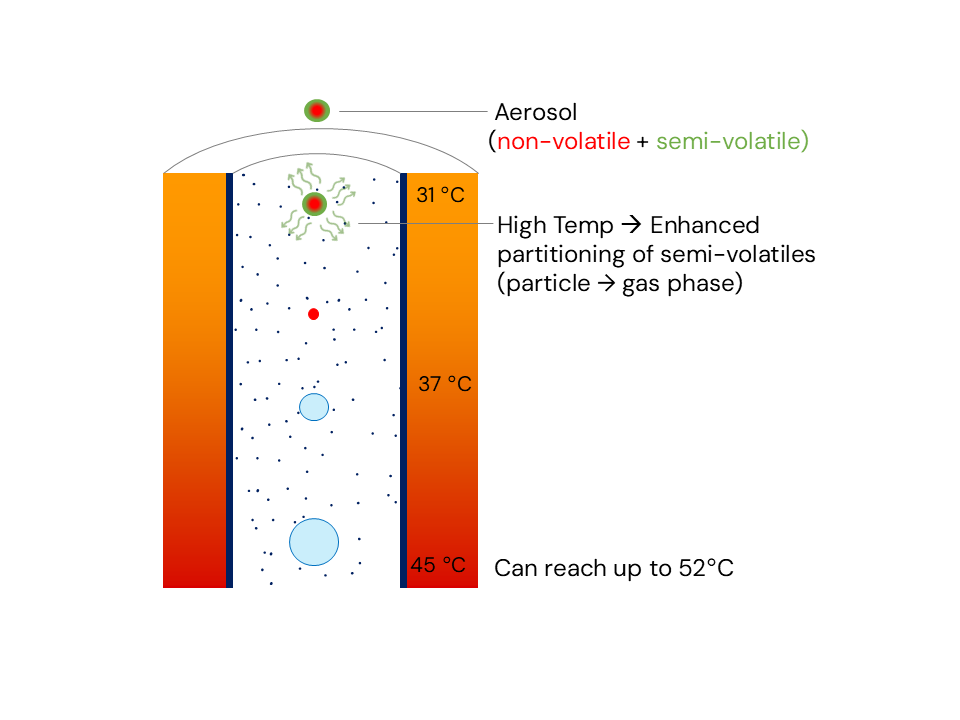
Conventional cloud condensation nuclei counters (such as the Streamwise CCNC, also known as DMT CCNC) use a heated vertical column to generate supersaturation. With a sample drawn at 25 °C, the column operates at roughly 30–52 °C — above the temperature range at which many real cloud droplets form. At these elevated temperatures, semi-volatile compounds can evaporate from the particles before measurement, biasing the recorded cloud condensation nuclei activity.1, 2, 3
The Low-Supersaturation Blind Spot
Measurements below approximately 0.13 % supersaturation — and in some cases below 0.2 % — are widely considered unreliable for instruments of this design.4, 5, 6 This operating floor makes it difficult to study highly hygroscopic particles, such as Southern Ocean aerosols (κ ≈ 0.92) larger than 100 nm, which activate well below that threshold.
Supersaturation stabilization bottlenecks
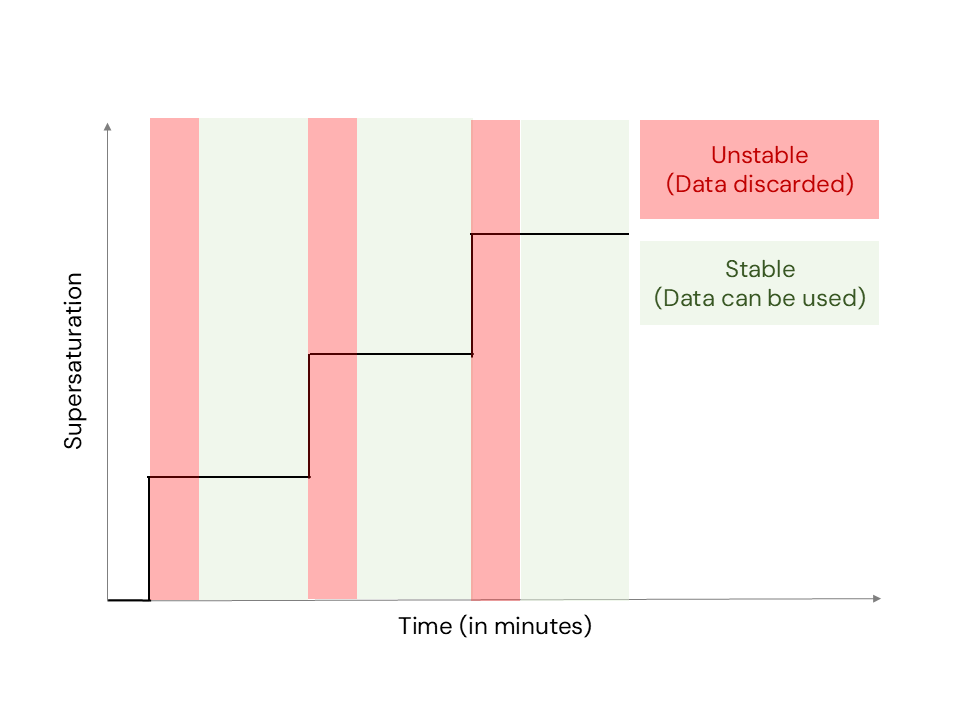
Because supersaturation is established with thermoelectric heaters, which respond slowly, thermal lag occurs when stepping between supersaturation levels or beginning a new supersaturation scan cycle. Data collected during these equilibration periods — up to the first three minutes of each step (could vary with different device) — must be excluded from analysis.
The HCCNC
Dynamic Temperature Range
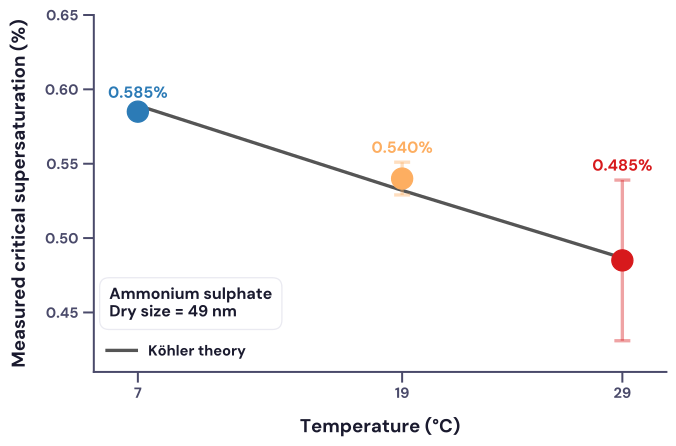
The HCCNC generates supersaturation across a temperature range of 4 °C to 40 °C — the first cloud condensation nuclei counter validated to operate across this temperature range.6 Development is underway to extend this further, which would allow researchers to study how temperature governs particle activation and gas–particle partitioning across a broader envelope.
Low-Supersaturation Capability
Precise thermal control and a residence time of up to 24 seconds allow the HCCNC to generate supersaturation levels reliably down to 0.05 %.
Speed Without Compromise
Data loss during supersaturation stepping is eliminated. The supersaturation cycle resets up to seven times faster than conventional cloud condensation nuclei counters, enabling a full sweep from 0.05 % to 0.8 % supersaturation in less than a minute.
Highly Modular Design
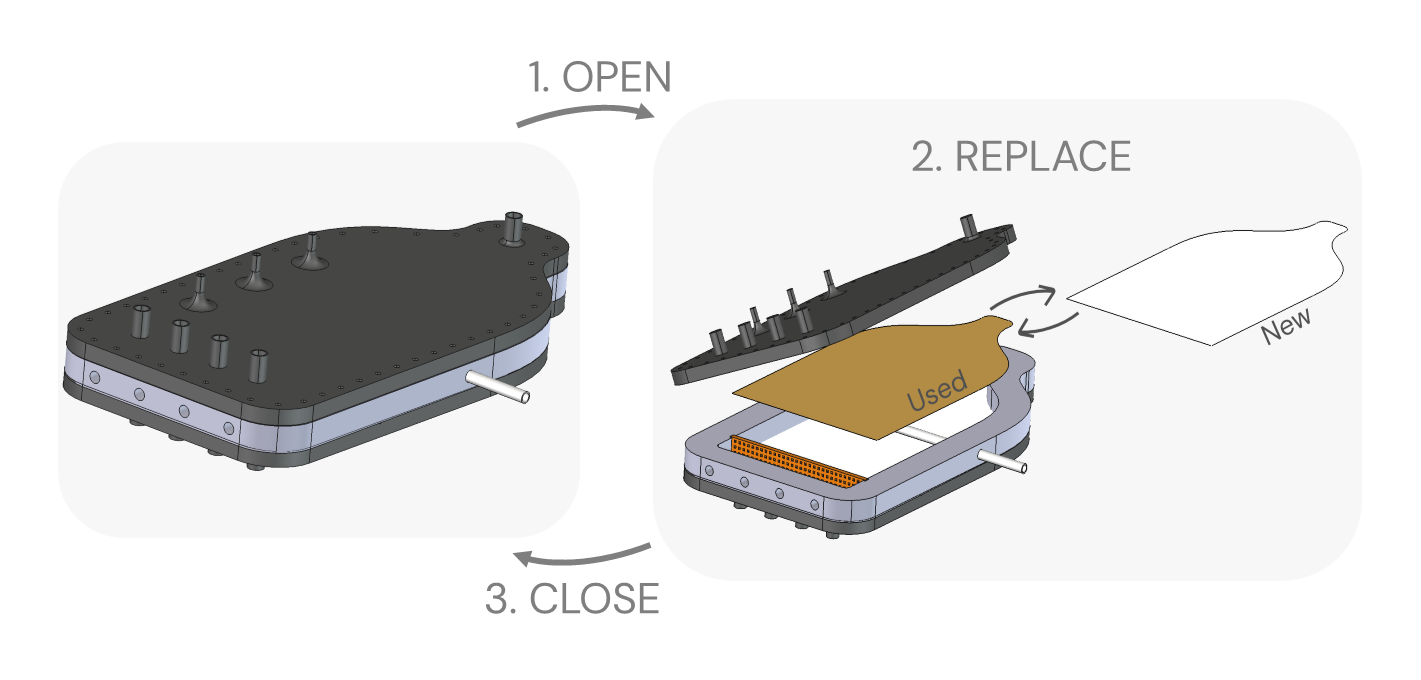
Opening the HCCNC chamber takes only three steps. After a long campaign, clearing residual material is as simple as opening a water bottle: open the chamber, replace the filter paper, close it. No specialist required — which saves time and cost. So you can focus on research not repairs.
How the HCCNC works.
The HCCNC operates on the principle of a parallel-plate thermal-gradient diffusion chamber.
Developed through computational fluid dynamics simulations, the design optimises laminar flow stability and precise temperature regulation to achieve stable, controllable supersaturation across a wide operating range.
Since temperature gradients drive supersaturation in a cloud condensation nuclei counter, each plate is controlled precisely and independently to provide stable and direct command over the internal supersaturation.
New science,
made measurable.
The HCCNC's capabilities unlock measurement regimes previously inaccessible. A few examples:
Low-Temperature Capability
Low-Supersaturation Capability
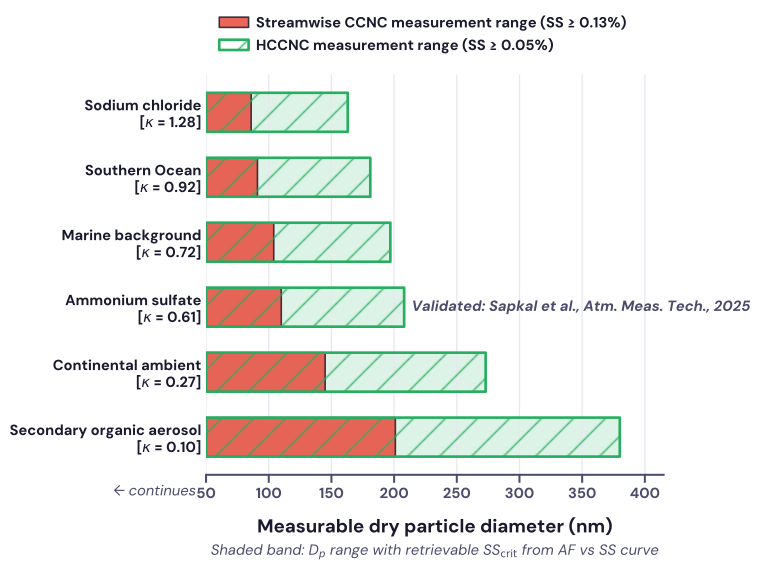
High-Supersaturation & Dynamic Residence Time
Validated by science.
Recognised by the field.
Peer-Reviewed Publication
Published in Atmospheric Measurement Techniques (EGU), 2025 — a full instrument characterisation validated against Köhler theory.6
Patent Filed
ETH Pioneer Fellowship 2026
Industry Recognition
Unsolicited licensing inquiries received from established industry incumbents, acknowledging the HCCNC's demonstrated performance advantage.
Active Customer Interest
Two research groups — one in Europe, one in Asia — are engaged in scientific work using the HCCNC. Two further researchers are in early discussions about acquiring the instrument.
The people behind the instrument.